
Electrolyte Powder: Benefits, Uses and Who Actually Needs It
What each electrolyte does, the benefits the research supports, who needs a sachet and who doesn't, and how to read a label in India.
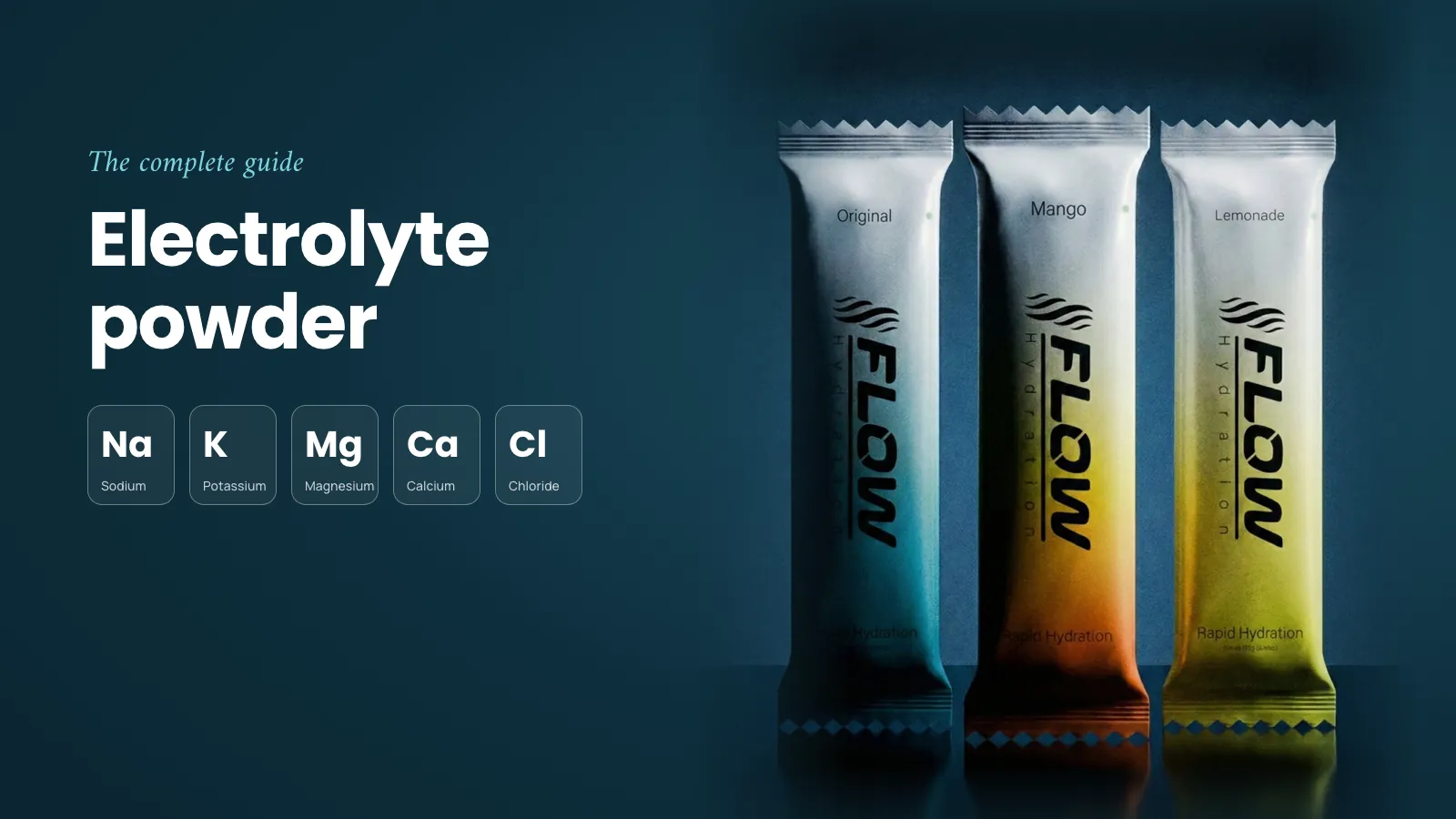
Key takeaways
- Electrolytes are charged minerals (sodium, potassium, magnesium, calcium, chloride) that control fluid balance, nerves and muscles.
- Sodium matters most: athletes lose about 825 mg per litre of sweat on average, with a wide range.
- Drinks with sodium keep more water in the body than plain water does.
- Under an hour in a cool room, water is enough. Use electrolytes for long, hot or very sweaty sessions.
- For diarrhoea or vomiting, use WHO-formula ORS, not a sports electrolyte mix.
Search interest in electrolyte powder has climbed steadily in India, and so has the confusion. Is it the same as ORS? Is it just expensive salt? Should you drink it every day? This guide covers what an electrolyte powder is, what each mineral does, who benefits and who doesn't, and how to read a label. Every number comes from a cited source.
What are electrolytes?
Electrolytes are minerals that carry an electrical charge once they dissolve in water. In your body, that charge does real work. It holds water in the right compartments, keeps nerves firing and lets muscles contract and relax. The five that matter for hydration are sodium, potassium, magnesium, calcium and chloride.
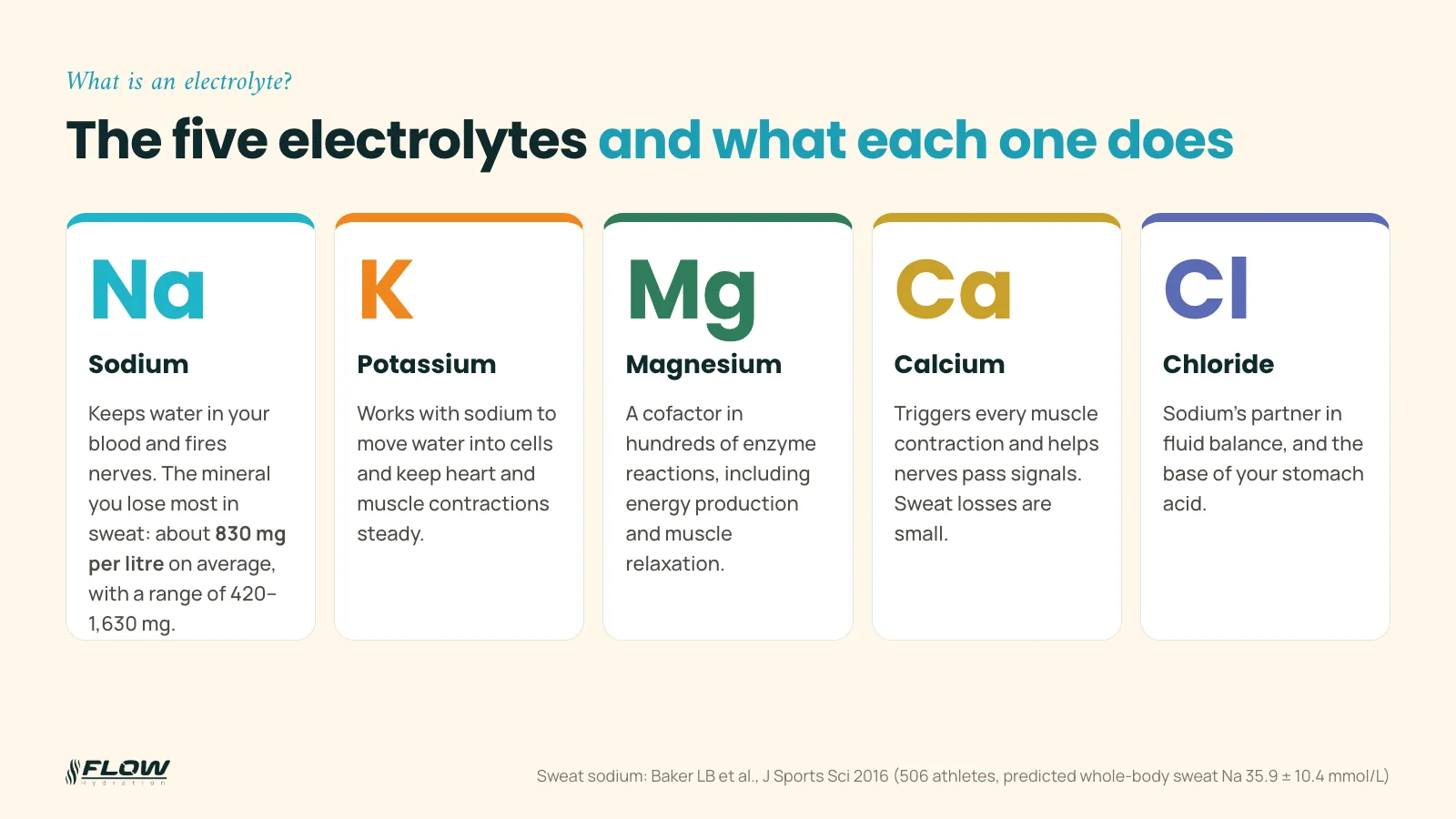
Sodium is the one that matters most when you sweat. In a study of 506 athletes, predicted whole-body sweat sodium averaged 35.9 mmol/L, about 825 mg of sodium per litre of sweat. Some people lost under half that and some more than double.1 Potassium, magnesium and calcium are lost too, but in far smaller amounts.
What is an electrolyte powder?
An electrolyte powder is a measured mix of those minerals, usually with a small amount of sugar and some flavour, that you stir into water. Most come as single-serve sachets or sticks. The point is to replace what you lose in sweat faster than food can, and to help your body hold on to the water you drink.
That second part is easy to miss. Plain water alone is absorbed quickly but also excreted quickly. In a randomised trial of 13 drinks, an oral rehydration solution kept significantly more water in the body over four hours than still water did.5 After exercise, a drink needs enough sodium to be retained. Otherwise much of the extra volume just becomes urine.6
Electrolyte powder benefits, according to the research
- Better fluid retention after sweating. Sodium helps you keep the water you drink rather than pass it.5,6
- Replacing sodium on long or hot sessions. The American College of Sports Medicine recommends drinks with electrolytes and carbohydrate during longer exercise, and individual plans because sweat rates vary so much.2
- Lower risk of diluting your blood. Drinking large volumes of plain water over many hours can drop blood sodium. This is exercise-associated hyponatremia, and overdrinking is its main cause.7
- Convenience and consistency. A sachet gives the same dose every time. Salting a bottle by eye doesn't.
What electrolyte powder won't do: give you energy the way food does, burn fat, detox anything, or fix dehydration from illness better than medical ORS. For diarrhoea or vomiting, use a WHO-formula ORS (see ORS vs electrolyte drinks).4
Who actually needs it?
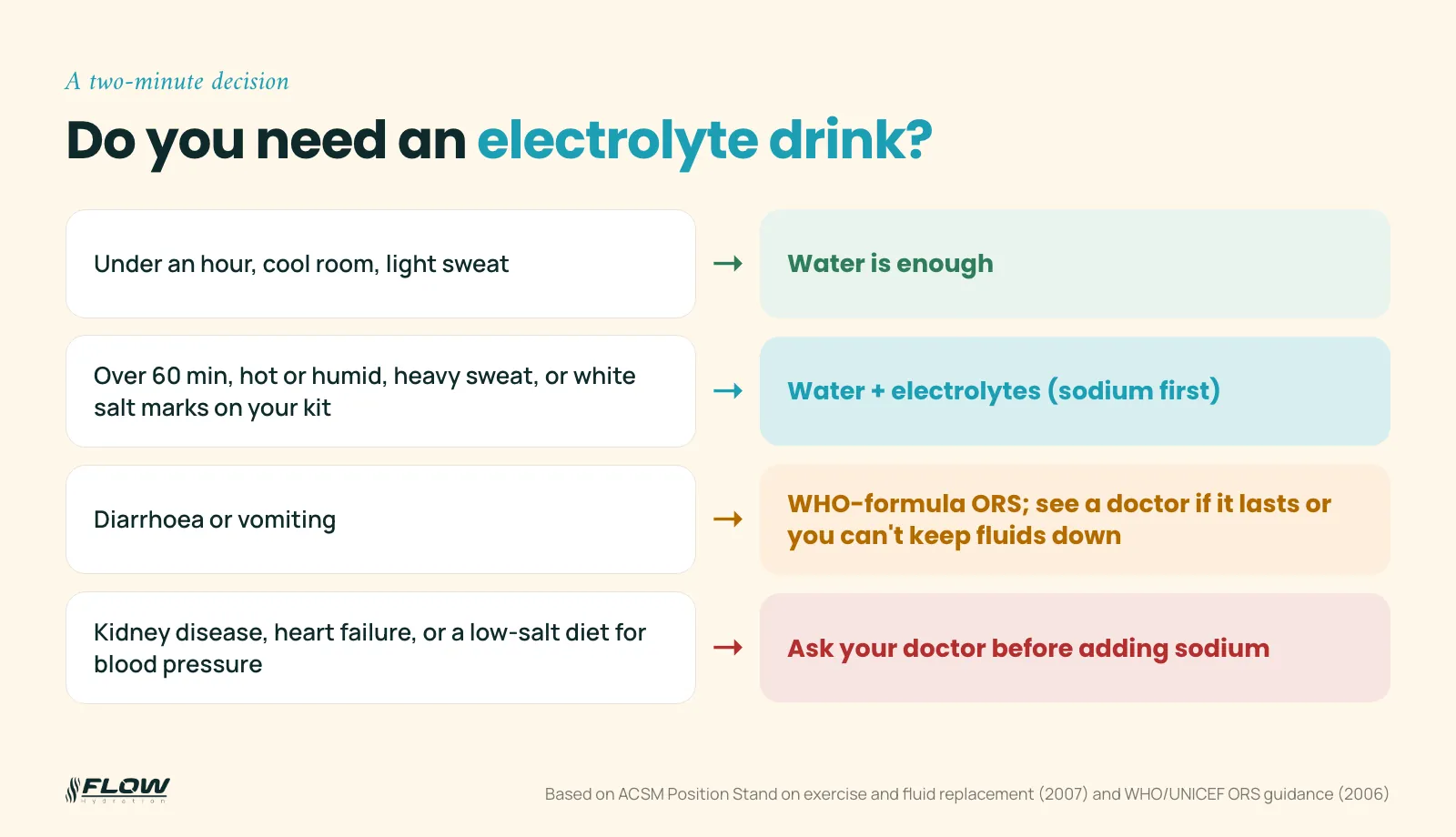
Honestly, plenty of people don't. If you're at a desk in an air-conditioned office or doing a 40-minute gym session in a cool room, water and normal meals cover you. Indians already eat plenty of salt. ICMR's dietary guidelines ask adults to keep added salt to 5 g a day (about 2 g of sodium) and note that sweat losses rise with heat and hard activity.3
Electrolytes earn their place when you lose a lot of sweat:
- Runs, rides, matches or treks longer than an hour, especially in Indian heat and humidity
- Back-to-back sessions, or training twice in a day
- Outdoor work or long commutes in summer
- Heavy, salty sweaters, the people who find white rings on their caps and kit
Sweat rate and sweat saltiness vary several-fold between people, so the only real answer is your own.8 Our sweat-rate guide shows how to measure it with a bathroom scale.
How to use electrolyte powder
Before training
If you're heading into a long or hot session, have a serving with water in the two to four hours before. ACSM suggests 5–7 ml of fluid per kg of body weight about four hours before exercise.2
During
For sessions over an hour, sip to thirst and include sodium. More detail in our guide to when to drink electrolytes around a workout.
After
Replacing roughly 1.25–1.5 litres for every kilogram lost, with sodium, restores fluid balance far better than plain water.6
How to choose the best electrolyte powder in India
There is no single "best". There's the right one for how much you sweat. Read the label for these:
- Sodium per serving. It's the headline number, because it's what you lose most. Many drinks sold as "hydration" carry very little.
- The water it's meant for. 1000 mg in 500 ml is a very different drink from 1000 mg in a litre.
- Sugar type and amount. A few grams of glucose helps absorption; 30 g is a soft drink. See do electrolyte drinks need sugar?
- Sweeteners and fillers. Check for sucralose, aspartame, stevia and sugar alcohols if they bother your stomach.
- FSSAI licence and honest claims. Since October 2025, a food product can't call itself "ORS" unless it follows the WHO formula.
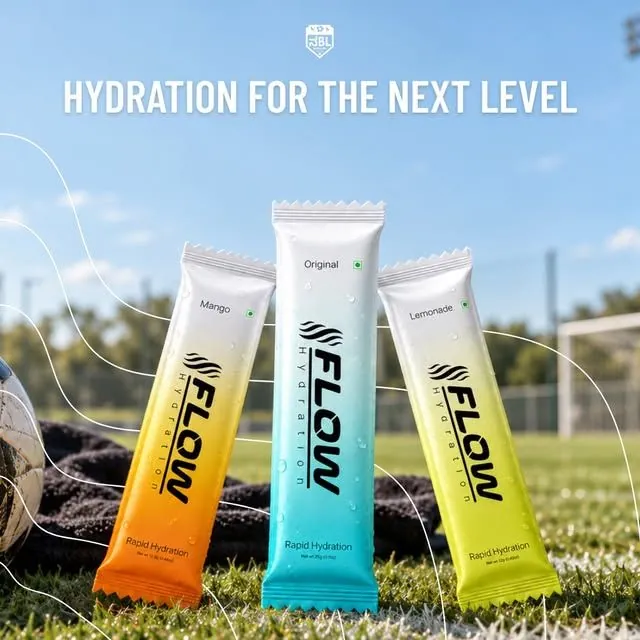
For reference, a sachet of Flow has 1000 mg sodium, 200 mg potassium and 60 mg magnesium, plus calcium and chloride, with 6.9 g glucose, mixed in 500 ml of water. That sits at the higher end for sodium on purpose: it's built for long, hot, sweaty sessions, not for sipping at a desk.
Can you take electrolytes every day?
If you sweat heavily every day, yes. You're replacing a real daily loss. If you don't, a daily sachet mostly adds salt to a diet that already has enough. People with kidney disease, heart failure or high blood pressure on a low-sodium diet should ask their doctor before using any electrolyte drink regularly.
Frequently asked questions
What is electrolyte powder used for?
Is electrolyte powder the same as ORS?
Can I drink electrolyte powder every day?
Does electrolyte powder have sugar?
When should I drink electrolytes, before or after a workout?
References
- 1.Baker LB, Barnes KA, Anderson ML, Passe DH, Stofan JR. Normative data for regional sweat sodium concentration and whole-body sweating rate in athletes. J Sports Sci. 2016;34(4):358–368. doi.org/10.1080/02640414.2015.1055291
- 2.Sawka MN, Burke LM, Eichner ER, et al. American College of Sports Medicine position stand: Exercise and fluid replacement. Med Sci Sports Exerc. 2007;39(2):377–390. doi.org/10.1249/mss.0b013e31802ca597
- 3.ICMR–National Institute of Nutrition. Dietary Guidelines for Indians, 2024 (Guideline 11: Restrict salt intake; Guideline 14: Drink adequate quantity of water). www.nin.res.in/dietaryguidelines/
- 4.World Health Organization & UNICEF. Oral rehydration salts: production of the new ORS. WHO/FCH/CAH/06.1. Geneva: WHO; 2006. www.who.int/publications/i/item/WHO-FCH-CAH-06.1
- 5.Maughan RJ, Watson P, Cordery PA, et al. A randomized trial to assess the potential of different beverages to affect hydration status: development of a beverage hydration index. Am J Clin Nutr. 2016;103(3):717–723. doi.org/10.3945/ajcn.115.114769
- 6.Shirreffs SM, Taylor AJ, Leiper JB, Maughan RJ. Post-exercise rehydration in man: effects of volume consumed and drink sodium content. Med Sci Sports Exerc. 1996;28(10):1260–1271. doi.org/10.1097/00005768-199610000-00009
- 7.Hew-Butler T, Rosner MH, Fowkes-Godek S, et al. Statement of the Third International Exercise-Associated Hyponatremia Consensus Development Conference, Carlsbad, California, 2015. Clin J Sport Med. 2015;25(4):303–320. doi.org/10.1097/JSM.0000000000000221
- 8.Baker LB. Sweating rate and sweat sodium concentration in athletes: a review of methodology and intra/interindividual variability. Sports Med. 2017;47(Suppl 1):111–128. doi.org/10.1007/s40279-017-0691-5
Aditya · Flow Hydration team
Writes about electrolytes, ORS and how to read a hydration label, working from WHO, ICMR and peer-reviewed sources.
First published 12 October 2026. This article is general information, not medical advice. If you have a medical condition, talk to your doctor.
Keep reading
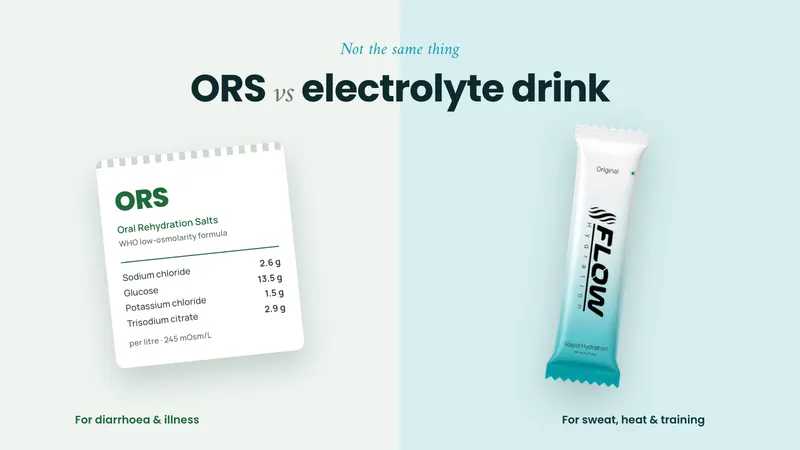
12 October 2026 · 8 min read
ORS vs Electrolyte Drinks: What's the Difference (and What FSSAI Changed)
ORS isn't banned, but sugary drinks can no longer use its name. The WHO formula, what FSSAI changed, and when to choose ORS over an electrolyte drink.
Read more
12 October 2026 · 8 min read
How Much Water Should You Drink a Day? What ICMR and the Science Say
ICMR says about 8 glasses (2 L) including beverages. Why your number may be higher, what counts as water, and the signs you're getting enough.
Read more
12 October 2026 · 7 min read
Coconut Water vs Electrolyte Drinks: Which Hydrates Better?
Two trials found coconut water rehydrates about as well as a sports drink after moderate exercise. Why sodium still matters for long, sweaty efforts.
Read more