
Marathon Hydration Plan for Indian Races: Sweat Rate, Sodium and Race Day
Measure your sweat rate with a bathroom scale, then build a race-day plan for Indian heat that avoids both dehydration and overdrinking.
Key takeaways
- Measure your sweat rate: (weight before − after + fluid drunk − urine) ÷ hours.
- Athletes average about 1.2 L/h of sweat and about 825 mg sodium per litre, but individuals vary several-fold.
- Race morning: 5–7 ml/kg with breakfast; during the race drink to thirst, about 400–800 ml an hour.
- Take sodium in races over two hours; weighing more at the finish means you overdrank.
- Afterwards: 1.25–1.5 L per kg lost, with sodium.
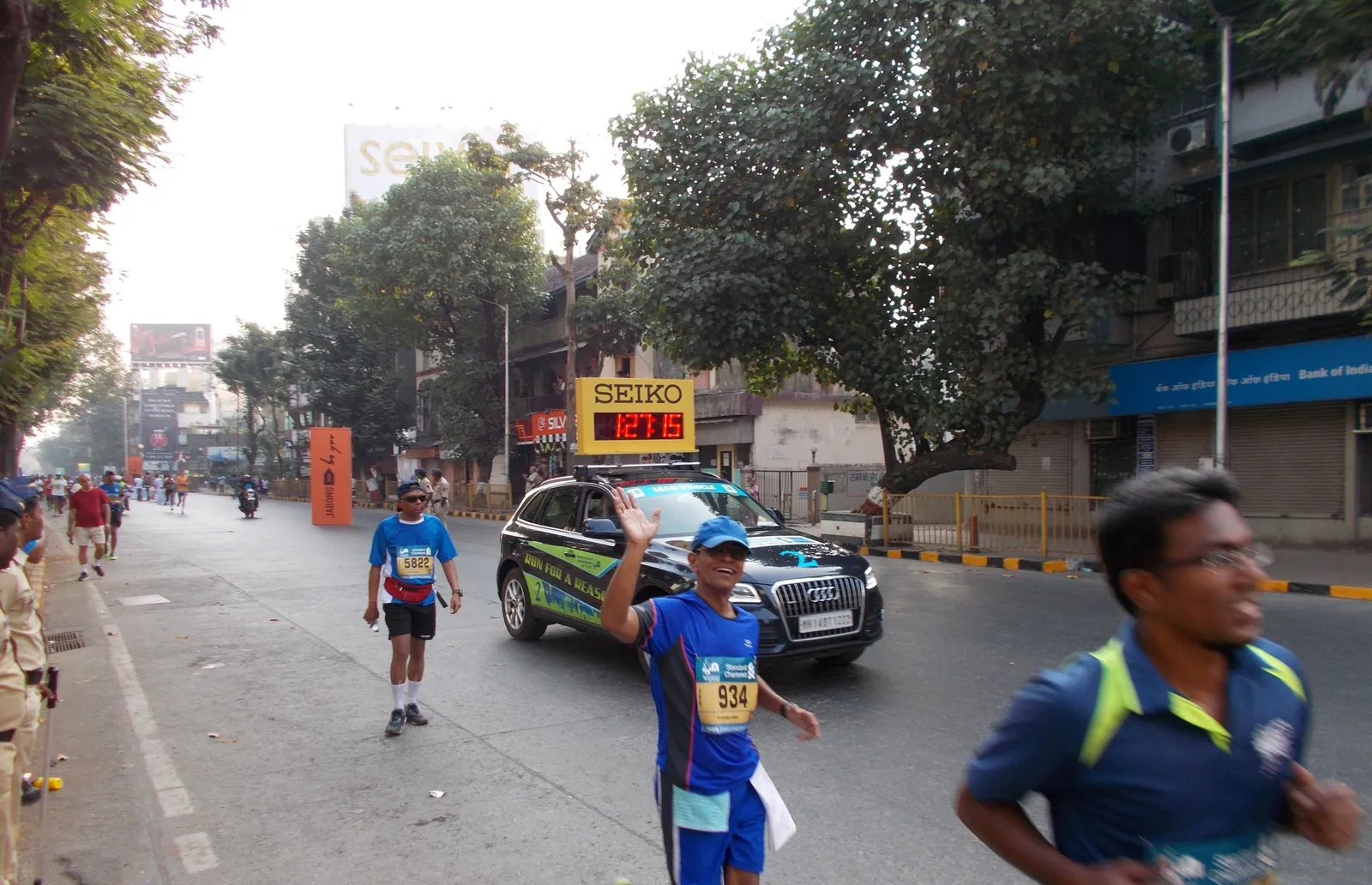
Indian race season (Mumbai in January, the Bengaluru and Delhi races, hundreds of city 10Ks and halves) runs through heat and humidity that European training plans don't account for. Hydration isn't about drinking as much as possible. It's about matching what you lose. Here's how to measure your sweat rate, build a race-day plan, and avoid the two real dangers: dehydration and overdrinking.
Step 1: Measure your sweat rate
Sweat rate is the single most useful number in endurance hydration, and you can measure it at home. ACSM recommends exactly this method.1
- Weigh yourself before a training run: minimal clothing, after peeing.
- Run for about an hour at race effort, in conditions like your race. Note how much you drink.
- Towel off and weigh yourself again in the same clothing.
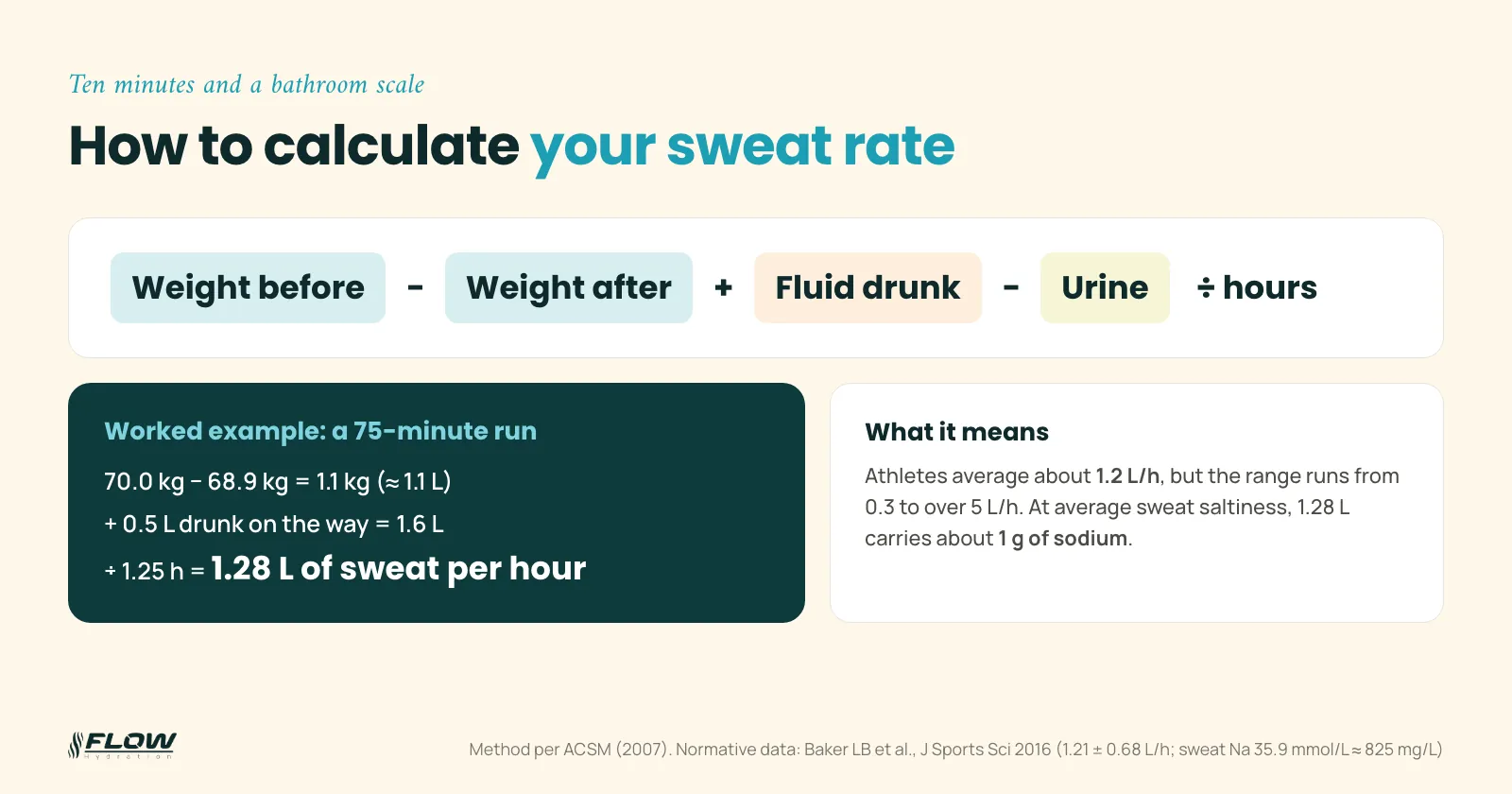
- Sweat rate (L/h) = (weight before − weight after + fluid drunk − any urine) ÷ hours. One kg lost is about one litre of sweat.
For context, a study of 506 athletes found an average sweat rate of 1.21 L/h, ranging from 0.26 to 5.73 L/h, with sweat sodium averaging about 825 mg per litre (roughly 420–1,630 mg).2 Two runners side by side can lose very different amounts of water and salt. Repeat the test in different weather. Your sweat rate in a Mumbai January will differ from a Bengaluru April.3
Step 2: Your race-day hydration plan
The night before
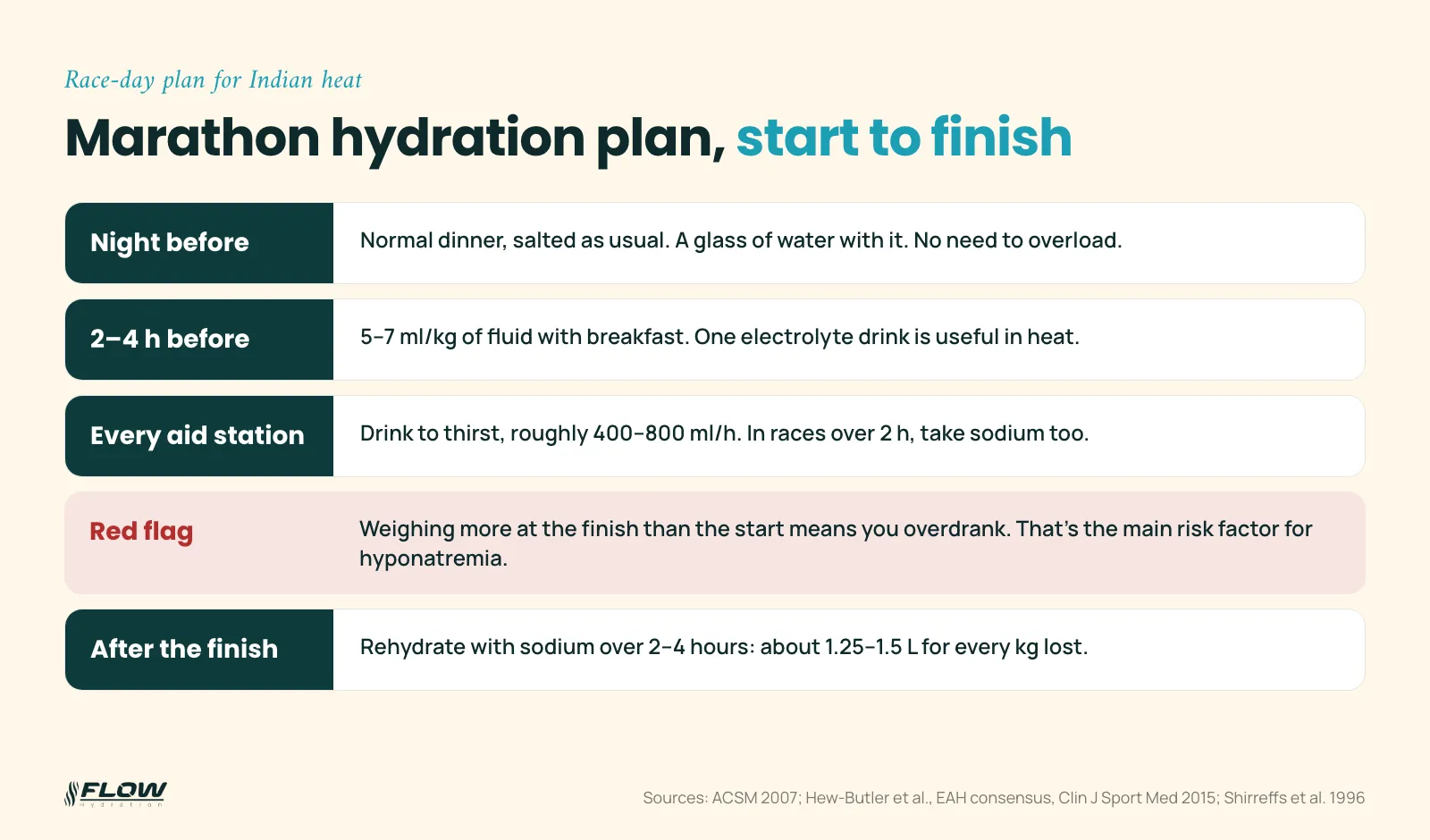
Eat a normal dinner, salted as you usually would, and drink to thirst. There's no benefit in forcing extra water. It mostly means a disturbed night.
Race morning (2–4 hours before)
Drink about 5–7 ml per kg of body weight with breakfast (350–490 ml for 70 kg). Some sodium, from salted food or an electrolyte drink, helps you retain it.1 Stop large drinks about 45 minutes before the start, and sip after that if you're thirsty.
During the race
- Drink to thirst at aid stations, usually landing in the 400–800 ml an hour range. In a meta-analysis of time trials, drinking to thirst matched or beat fixed schedules.5
- Use your sweat rate as a ceiling, not a target. If you sweat 1.3 L/h, replacing 500–800 ml of it is normal. Nobody replaces all of it while running, and you don't need to.1
- Take sodium in races over about two hours, or if you're a heavy, salty sweater. An electrolyte drink, salt capsules or salty food all work.
- Carbohydrate matters too: 30–60 g an hour, and up to 90 g for the longest efforts, from gels, drinks or bananas.7
The red flag: gaining weight
The most dangerous mistake isn't drinking too little. It's drinking too much. Exercise-associated hyponatremia (low blood sodium) happens when runners drink more than they sweat over many hours. The international consensus names overdrinking as the main cause, and notes that sodium supplements don't protect you if you overdrink.4 Warning signs include nausea, headache, confusion, swollen fingers and weighing more at the finish than at the start. Drink to thirst, and know your sweat rate.
Step 3: After the finish
Weigh yourself if you can. Over the next 2–4 hours, drink about 1.25–1.5 litres for every kg lost, with sodium. With a low-sodium drink, much of that volume is simply excreted.6 A salty meal plus water works, and so does an electrolyte drink.
Adjusting for Indian conditions
- Humidity (Mumbai, Chennai, Kolkata, Kochi) slows sweat evaporation, so you sweat more for less cooling. Expect a higher sweat rate than your dry-weather test.
- Early starts help. Most Indian marathons start at dawn for a reason. Your sweat rate rises as the sun does.
- Heat acclimatisation takes 10–14 days of gradual exposure. Do your long runs in race-like conditions in the final weeks.8
- Trail runs and treks have fewer refill points, so carry more and refill at every stream or village tap you trust.
Using Flow on race day
Each Flow sachet carries 1000 mg sodium in 500 ml, about what a moderate sweater loses in an hour of hard running. Practise with it on long runs first, never for the first time on race day. If your race serves another drink, find out which one and train with that too.
More: cramps, heat stroke first aid, and the before-during-after timeline.
Frequently asked questions
How much water should I drink during a marathon?
When should I take electrolytes during a marathon?
How do I calculate my sweat rate?
What is hyponatremia in runners?
References
- 1.Sawka MN, Burke LM, Eichner ER, et al. American College of Sports Medicine position stand: Exercise and fluid replacement. Med Sci Sports Exerc. 2007;39(2):377–390. doi.org/10.1249/mss.0b013e31802ca597
- 2.Baker LB, Barnes KA, Anderson ML, Passe DH, Stofan JR. Normative data for regional sweat sodium concentration and whole-body sweating rate in athletes. J Sports Sci. 2016;34(4):358–368. doi.org/10.1080/02640414.2015.1055291
- 3.Baker LB. Sweating rate and sweat sodium concentration in athletes: a review of methodology and intra/interindividual variability. Sports Med. 2017;47(Suppl 1):111–128. doi.org/10.1007/s40279-017-0691-5
- 4.Hew-Butler T, Rosner MH, Fowkes-Godek S, et al. Statement of the Third International Exercise-Associated Hyponatremia Consensus Development Conference, Carlsbad, California, 2015. Clin J Sport Med. 2015;25(4):303–320. doi.org/10.1097/JSM.0000000000000221
- 5.Goulet EDB. Effect of exercise-induced dehydration on time-trial exercise performance: a meta-analysis. Br J Sports Med. 2011;45(14):1149–1156. doi.org/10.1136/bjsm.2010.077966
- 6.Shirreffs SM, Taylor AJ, Leiper JB, Maughan RJ. Post-exercise rehydration in man: effects of volume consumed and drink sodium content. Med Sci Sports Exerc. 1996;28(10):1260–1271. doi.org/10.1097/00005768-199610000-00009
- 7.Thomas DT, Erdman KA, Burke LM. Nutrition and Athletic Performance (joint position statement of ACSM, the Academy of Nutrition and Dietetics and Dietitians of Canada). Med Sci Sports Exerc. 2016;48(3):543–568. doi.org/10.1249/MSS.0000000000000852
- 8.McDermott BP, Anderson SA, Armstrong LE, et al. National Athletic Trainers' Association position statement: Fluid replacement for the physically active. J Athl Train. 2017;52(9):877–895. doi.org/10.4085/1062-6050-52.9.02
Susheel · Flow Hydration team
Covers running, races and training hydration, drawing on the ACSM position stands and the field research behind them.
First published 12 October 2026. This article is general information, not medical advice. If you have a medical condition, talk to your doctor.
Keep reading
12 October 2026 · 8 min read
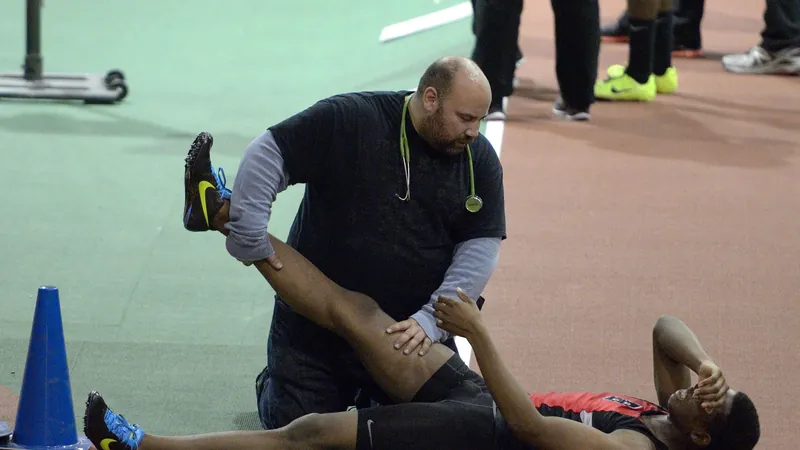
Muscle Cramps: What Really Causes Them, and Do Electrolytes or Magnesium Help?
Research points to fatigue more than dehydration. When electrolytes help, why magnesium probably won't, and what to do mid-cramp.
Read more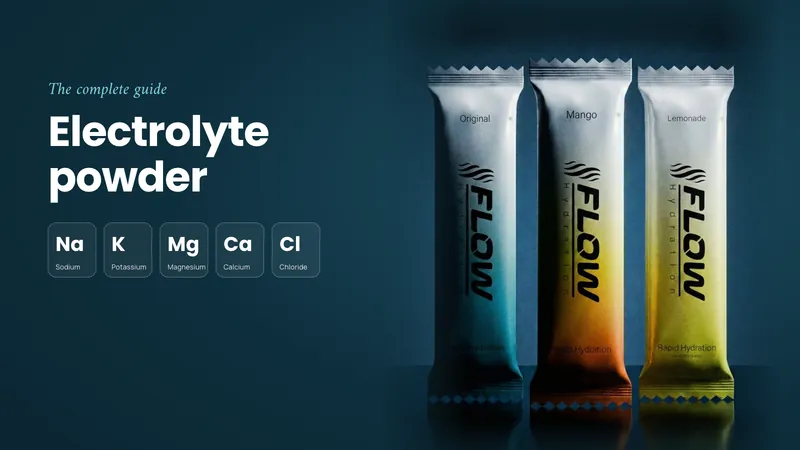
12 October 2026 · 9 min read
Electrolyte Powder: Benefits, Uses and Who Actually Needs It
What each electrolyte does, the benefits the research supports, who needs a sachet and who doesn't, and how to read a label in India.
Read more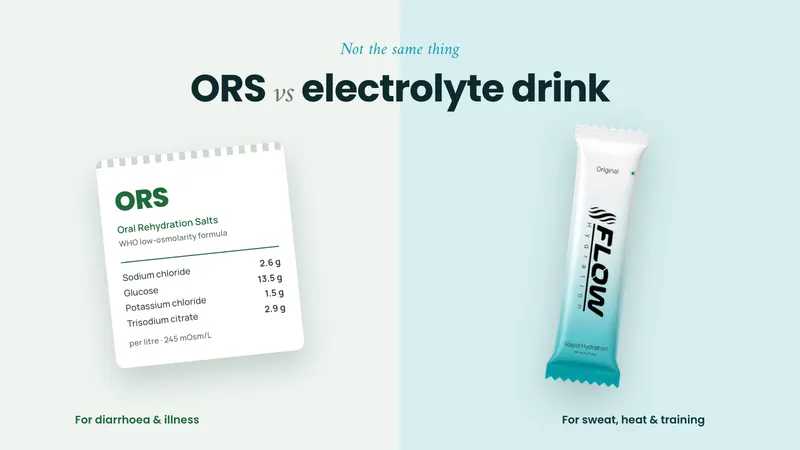
12 October 2026 · 8 min read
ORS vs Electrolyte Drinks: What's the Difference (and What FSSAI Changed)
ORS isn't banned, but sugary drinks can no longer use its name. The WHO formula, what FSSAI changed, and when to choose ORS over an electrolyte drink.
Read more