
ORS vs Electrolyte Drinks: What's the Difference (and What FSSAI Changed)
ORS isn't banned, but sugary drinks can no longer use its name. The WHO formula, what FSSAI changed, and when to choose ORS over an electrolyte drink.
Key takeaways
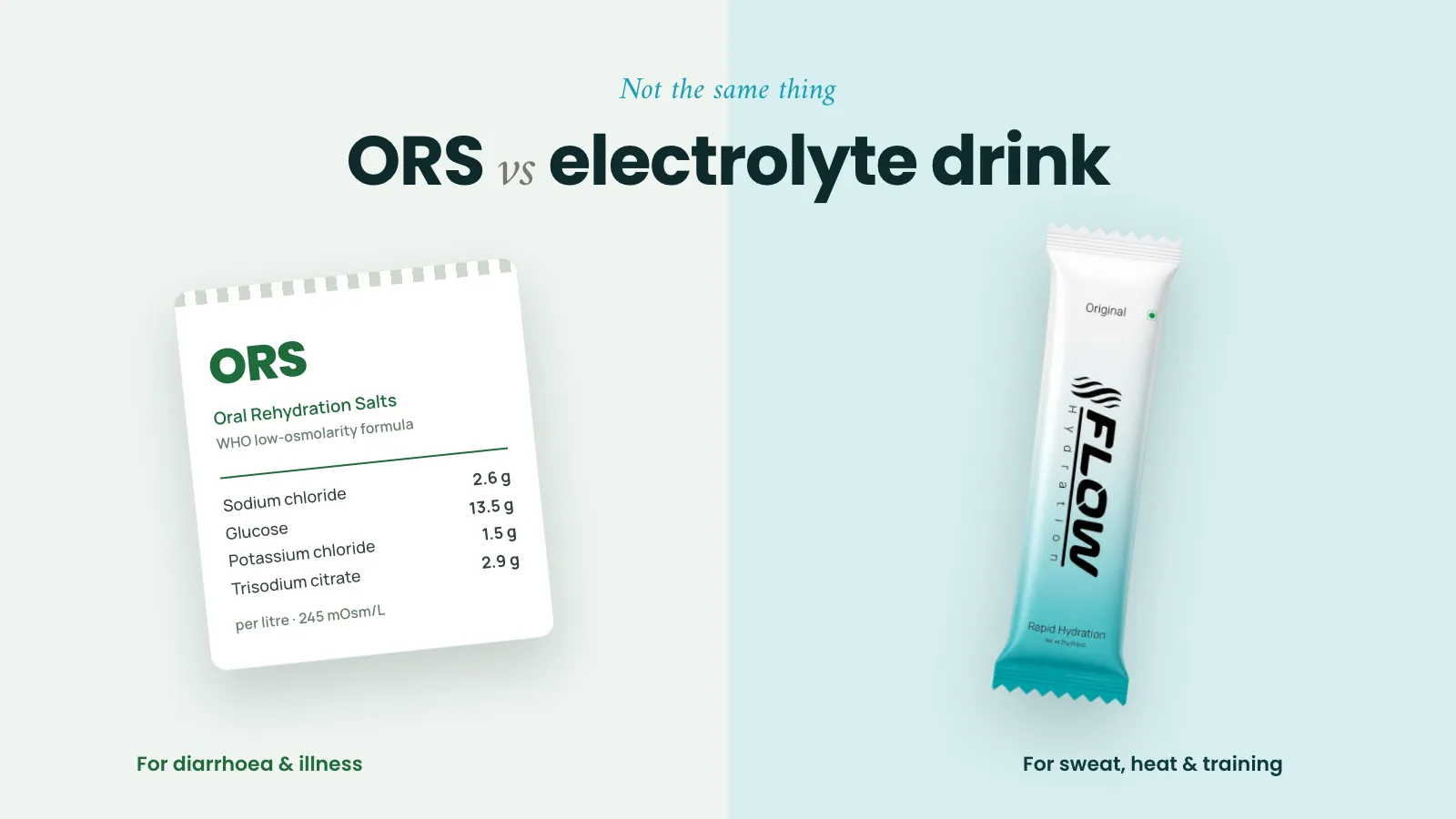
- ORS is a WHO-formula medicine: 75 mmol/L sodium and 75 mmol/L glucose, 245 mOsm/L.
- FSSAI's October 2025 order stops food products using 'ORS' unless they meet the WHO formula. Real ORS isn't banned.
- Electrolyte drinks are foods with no fixed recipe, so sodium and sugar vary widely. Read the label.
- Use ORS for diarrhoea and vomiting; use an electrolyte drink for sweat losses from training and heat.
In October 2025 the Food Safety and Standards Authority of India (FSSAI) told food and drink companies to stop using the letters "ORS" on anything that isn't a WHO-formula oral rehydration salt. Searches for "ORS banned in India" spiked overnight. ORS itself isn't banned. What changed is that sugary drinks can no longer borrow its name.2,3 This article explains the difference between ORS and an electrolyte drink, and when to reach for each.
What is ORS?
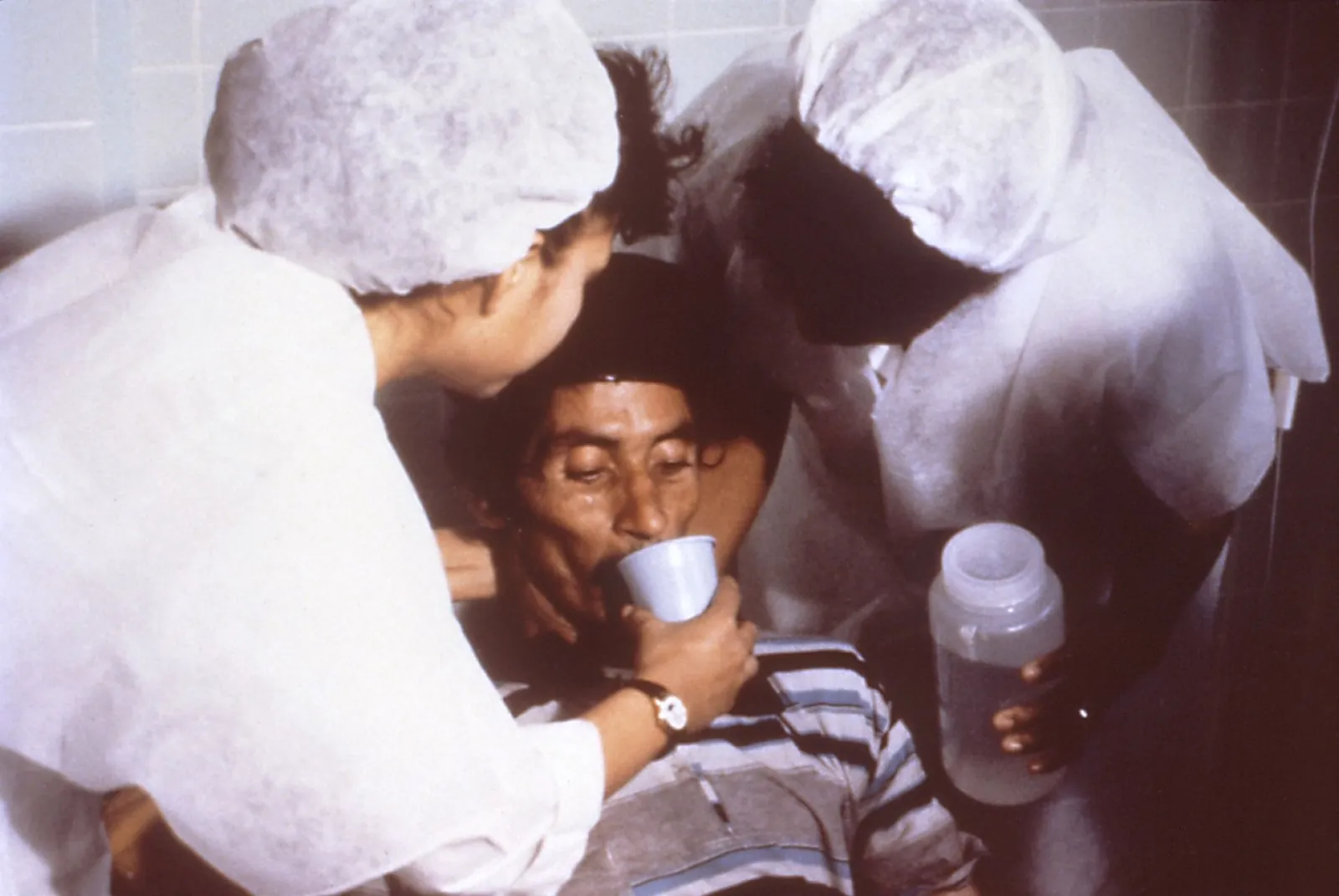
ORS, oral rehydration salts, is a medicine. Its recipe is fixed by the World Health Organization and UNICEF. The current "low-osmolarity" formula, adopted in the mid-2000s, contains per litre of water:
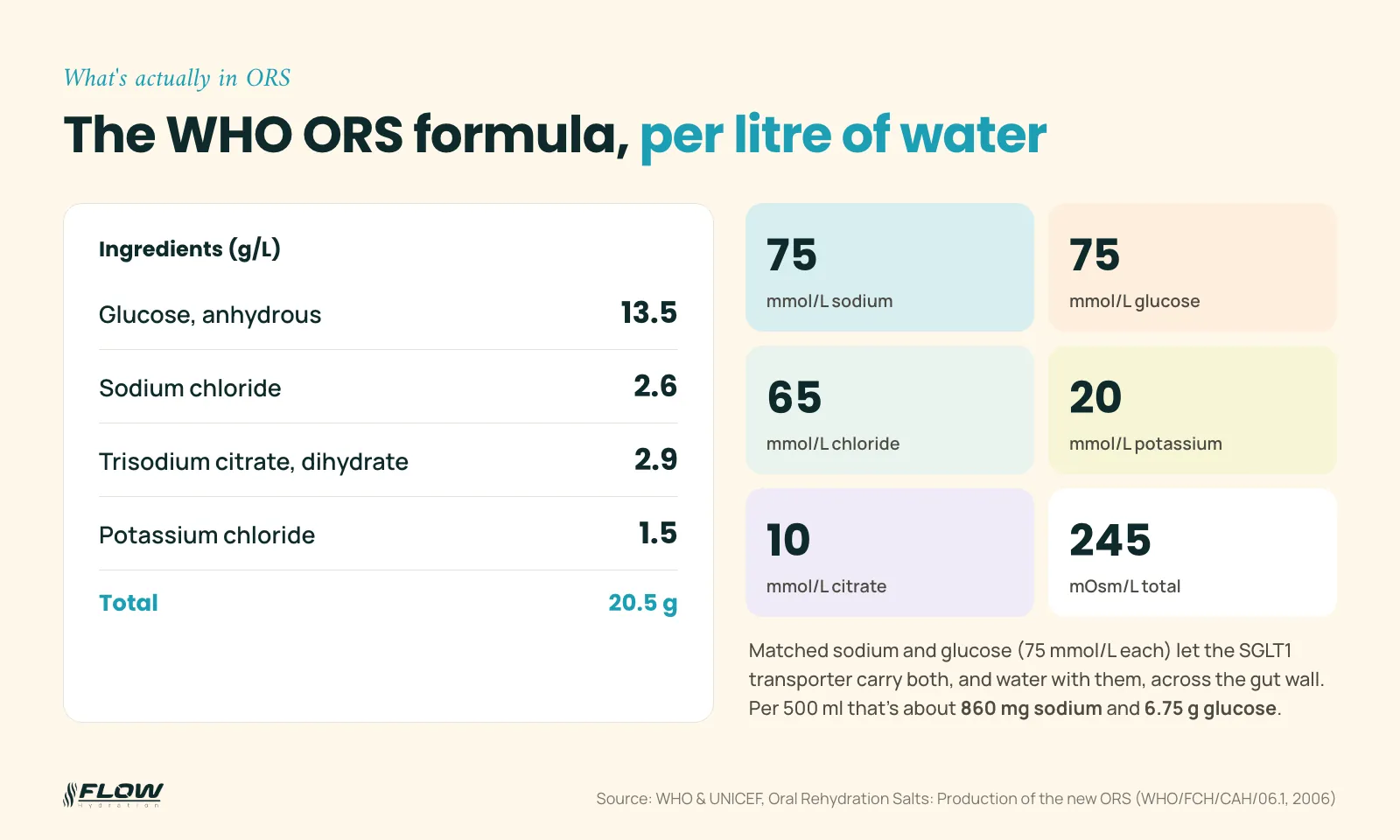
- 75 mmol/L sodium (about 1,725 mg)
- 75 mmol/L glucose (13.5 g)
- 20 mmol/L potassium, 65 mmol/L chloride and 10 mmol/L citrate
- A total osmolarity of 245 mOsm/L1
That balance is the whole point. Glucose and sodium are carried together across the gut wall by a transporter called SGLT1, and water follows them. That's why ORS works even when the gut is inflamed by diarrhoea.1,5 It's also why a properly made ORS keeps more fluid in the body than water. In one trial it outperformed still water over four hours.4
What the FSSAI order actually changed
Since 2024, beverage makers had been allowed to use "ORS" in brand names if they printed a disclaimer that the product was not a WHO formula. Many of these drinks carried far more sugar and far less sodium than real ORS. Hyderabad paediatrician Dr Sivaranjani Santosh campaigned for years against the practice, including a public interest litigation in the Telangana High Court. In October 2025 FSSAI withdrew the permission and asked state authorities to remove non-compliant products.2,3
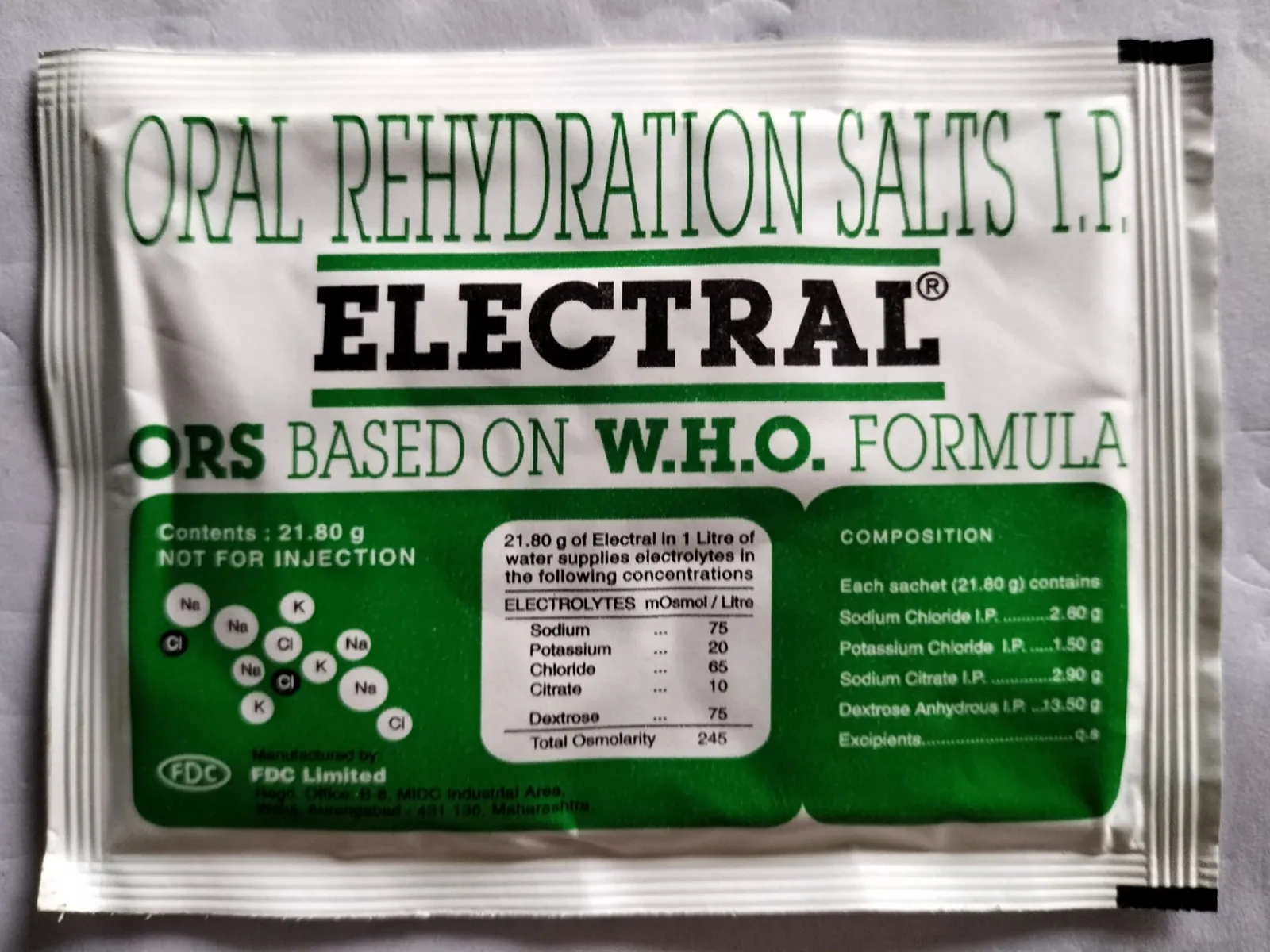
FSSAI was explicit that genuine WHO-formula ORS, regulated as a drug under the Drugs and Cosmetics Act, 1940, is unaffected.2
ORS vs electrolyte drink: the differences
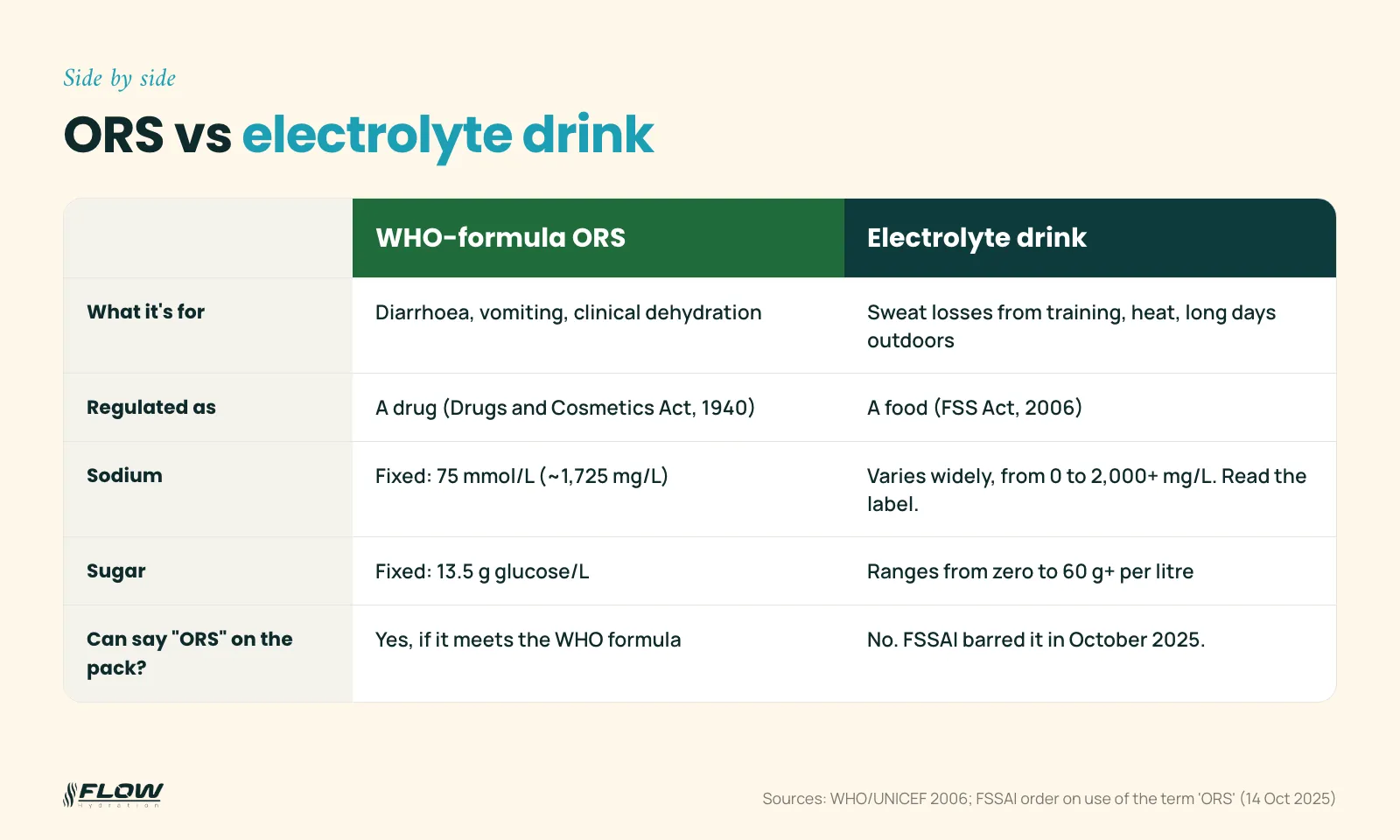
An electrolyte drink is a food, not a medicine. There's no single recipe, so sodium can range from almost nothing to more than ORS, and sugar from zero to soft-drink levels. Some are excellent for sport. Some are coloured sugar water. You have to read the label.
The bigger difference is purpose. ORS is calibrated for diarrhoeal losses, which drain water and a lot of sodium quickly from the gut. Sports electrolyte drinks are built for sweat losses, which vary hugely by person: one study of 506 athletes found sweat sodium ranging from about 420 to over 1,600 mg per litre.6 That's why ACSM recommends tailoring fluid plans to the individual.7
Which should you use?
Use WHO-formula ORS for
- Diarrhoea or vomiting, in adults and children
- Dehydration during illness, alongside medical advice
Don't swap in a sports drink, a "glucose" powder or a homemade mix when someone is ill, especially a child. If someone can't keep fluids down, is passing very little urine, or is drowsy or confused, they need a doctor.
Use an electrolyte drink for
- Training or matches longer than about an hour
- Hot, humid days with heavy sweating
- Recovery between sessions
Can you drink ORS after exercise? It works. Lab research even shows an ORS-like drink protects against the drop in blood sodium that plain water causes after sweating.8 But ORS is designed for illness, tastes medicinal, and has less sodium per 500 ml than some sports mixes. Most people find it easier to use a drink made for training.
Where Flow fits
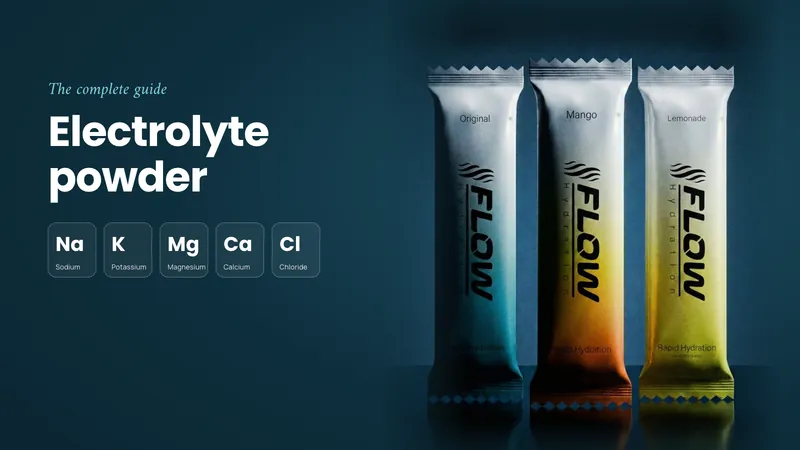
Flow is an electrolyte drink, not ORS, and we don't call it one. Per sachet in 500 ml it has 1000 mg sodium (WHO ORS has about 860 mg in the same volume), 200 mg potassium, magnesium and calcium, and 6.9 g glucose (ORS has 6.75 g). We built it for sweat, not stomach bugs. If you're ill, use ORS. See what's in a Flow sachet.
Frequently asked questions
Is ORS banned in India?
Is electrolyte powder the same as ORS?
Can I drink ORS after a workout?
Can I give an electrolyte drink to a child with diarrhoea?
References
- 1.World Health Organization & UNICEF. Oral rehydration salts: production of the new ORS. WHO/FCH/CAH/06.1. Geneva: WHO; 2006. www.who.int/publications/i/item/WHO-FCH-CAH-06.1
- 2.The Week. ORS controversy: No ORS-like drinks without WHO-approved formulation, says FSSAI. 25 October 2025. www.theweek.in/news/health/2025/10/25/ors-controversy-no-ors-like-drinks-without-who-approved-formulation-says-fssai.html
- 3.The Tribune. Hyderabad-based paediatrician Dr Sivaranjani Santosh's crusade forced FSSAI to issue an order barring FMCG firms from using 'ORS' on their sugary drinks. www.tribuneindia.com/news/in-depth/hyderabad-based-paediatrician-dr-sivaranjani-santoshs-crusade-forced-fssai-to-issue-an-order-barring-fmcg-firms-from-using-ors-on-their-sugary-drinks
- 4.Maughan RJ, Watson P, Cordery PA, et al. A randomized trial to assess the potential of different beverages to affect hydration status: development of a beverage hydration index. Am J Clin Nutr. 2016;103(3):717–723. doi.org/10.3945/ajcn.115.114769
- 5.Shi X, Passe DH. Water and solute absorption from carbohydrate-electrolyte solutions in the human proximal small intestine: a review and statistical analysis. Int J Sport Nutr Exerc Metab. 2010;20(5):427–442. doi.org/10.1123/ijsnem.20.5.427
- 6.Baker LB, Barnes KA, Anderson ML, Passe DH, Stofan JR. Normative data for regional sweat sodium concentration and whole-body sweating rate in athletes. J Sports Sci. 2016;34(4):358–368. doi.org/10.1080/02640414.2015.1055291
- 7.Sawka MN, Burke LM, Eichner ER, et al. American College of Sports Medicine position stand: Exercise and fluid replacement. Med Sci Sports Exerc. 2007;39(2):377–390. doi.org/10.1249/mss.0b013e31802ca597
- 8.Lau WY, Kato H, Nosaka K. Water intake after dehydration makes muscles more susceptible to cramp but electrolytes reverse that effect. BMJ Open Sport Exerc Med. 2019;5(1):e000478. doi.org/10.1136/bmjsem-2018-000478
Aditya · Flow Hydration team
Writes about electrolytes, ORS and how to read a hydration label, working from WHO, ICMR and peer-reviewed sources.
First published 7 May 2026. This article is general information, not medical advice. If you have a medical condition, talk to your doctor.
Keep reading
12 October 2026 · 9 min read
Electrolyte Powder: Benefits, Uses and Who Actually Needs It
What each electrolyte does, the benefits the research supports, who needs a sachet and who doesn't, and how to read a label in India.
Read more
12 October 2026 · 8 min read
Dehydration Symptoms in Adults: Signs, Urine Colour Chart and What to Drink
How dehydration feels at 1–2% and when it becomes an emergency, plus a urine colour chart and what to drink at each stage.
Read more
12 October 2026 · 8 min read
How Much Water Should You Drink a Day? What ICMR and the Science Say
ICMR says about 8 glasses (2 L) including beverages. Why your number may be higher, what counts as water, and the signs you're getting enough.
Read more